Showing posts with label With Czech translation. Show all posts

Friday, September 12, 2025

Excerpt on the Sack of Prague, from article written by Martha Lille for "Allas Krönika" magazine, year 1928

Source:

Ett 10-års jubileum, article written by Martha Lille for Allas Krönika, issue 43, pages 1163 to 1164, issue of October 27, 1928; original at the Finnish National Library (Kansalliskirjasto/Nationalbiblioteket)


Allas Krönika, 27.10.1928 no 43, s. 1163-1164 https://digi.kansalliskirjasto.fi/aikakausi/binding/735679 Kansalliskirjaston Digitaaliset Aineistot


The article excerpt:

... Jag står på Karlsbrücke medan Moldaus vatten som ett glittrande silverband i svindlande fart glider fram under de sju broarna. Och medan floden brusar under mig, betänker, att från greve Colloredos palats rövades 12 tunnor guld motsvarande ett värde av 36 milj. mark, 60 cwt. silver och från Czernins och Kolovratins palats ävenledes miljoner. Från kungliga palatset bortfördes konstverk av Michelangelo, Rafael, Tizian och Rubens, men en stor del av dem råkade på villovägar och försvunno, emedan drottning Kristina ej förstod sig på konst. Soldaterna fingo plundra fritt och Königsmark och Wrangel erhöllo stora delar av bytet. Biblioteken i klostren och slotten fingo bidraga med sin andel till detta, och en av Uppsala universitets största skatter »Codex argenteus», en översättning av bibeln på gotiska, gjord av biskop Vulfila på 400-talet härstammar från Prag. ...

Czech translation (my own):

... Stojím na Karlově mostě, zatímco vody Vltavy, jako třpytivá stříbrná stuha, kloužou závratnou rychlostí pod sedmi mosty. A zatímco řeka hučí pode mnou, přemýšlím, že z hradu hraběte Colloreda bylo ukradeno 12 sudů zlata v hodnotě 36 milionů marek a 60 centi stříbra a z hradů Černín a Kolowrat byly také ukradeny miliony. Z královského hradu byla odvezena umělecká díla Michelangela, Raffaela, Tiziana a Rubense, ale velká část z nich se ztratila a zmizela, protože královna Kristina umění nerozuměla. Vojáci směli volně drancovat a Königsmarck a Wrangel dostali velkou část kořisti. K tomu musely přispět i knihovny v klášterech a na hradech a jeden z největších pokladů Uppsalské univerzity, "Codex Argenteus", překlad Bible do gótštiny, který v 5. století vytvořil biskup Wulfila, pochází z Prahy. ...

English translation (my own):

... I stand on the Charles Bridge while the waters of the Moldau, like a glittering silver ribbon, glide at dizzying speed under the seven bridges. And while the river roars beneath me, I consider that from Count Colloredo's castle 12 barrels of gold, equivalent to a value of 36 million marks, 60 cwt. of silver, were stolen, and from the castles of Černín and Kolowrat, millions were also stolen. Works of art by Michelangelo, Raphael, Titian and Rubens were taken from the royal castle, but a large part of them went astray and disappeared, because Queen Kristina did not understand art. The soldiers were allowed to plunder freely, and Königsmarck and Wrangel received large parts of the spoils. The libraries in the monasteries and castles had to contribute their share to this, and one of Uppsala University's greatest treasures, the "Codex Argenteus", a translation of the Bible into Gothic, made by Bishop Wulfila in the 5th century, originates from Prague. ...

Note: Moldau is the German name for the Vltava River, the longest river in what is now the Czech Republic, a left tributary of the Elbe River. It runs southeast along the Bohemian Forest and then north across Bohemia, through Český Krumlov, České Budějovice and Prague. It is commonly referred to as the "Czech national river".

Saturday, February 17, 2024

Excerpt from Elizabeth Stuart, Queen of Bohemia's letter to Sir Edward Nicholas, dated October 1/11 (New Style), 1655

Source:

Archaeologia, or, miscellaneous tracts relating to antiquity, volume 37, part 1, page 234, published by the Society of Antiquaries of London, 1857
The letter excerpt:

Mr Secretarie, ... There is heere little news, onelie our States are not at all pleased with the Suedes victorie. They are iustlie punished for assisting the Queene of Sueden against my Uncle. ... I ame ever
Your most affectionat frend,
E R
Hagh, Oct. 11.

With modernised spelling:

Mr. Secretary,
... There is here little news, only our States are not at all pleased with the Swedes' victory. They are justly punished for assisting the Queen of Sweden against my Uncle. ... I am ever
your most affectionate friend,
E. R.
Haag, October 11.

French translation (my own):

Monsieur le secrétaire,
... Il y a peu de nouvelles ici, si ce n'est que nos États ne sont pas du tout satisfaits de la victoire suédoise. Ils sont justement punis pour avoir aidé la reine de Suède contre mon Oncle. ... Je suis toujours
votre très affectionnée ami
E. R.
La Haye, le 11 octobre.

Czech translation (my own):

Pane sekretáři,
... Je zde málo zpráv, pouze to, že naše Státy nejsou vůbec potěšeny vítězstvím Švédů. Jsou spravedlivě potrestáni za pomoc švédské královně proti mému Strýci. ... Jsem vždy
vaše nejmilejší přítelkyně
E. R.
Haag, 11. října.

Swedish translation (my own):

Min herr sekreterare,
... Det finns här få nyheter, bara att våra Stater är inte alls nöjda med svenskarnas seger. De straffas med rätta för att ha hjälpt Sveriges drottning mot min Morbror. ... Jag är alltid
Er tillgivnaste vän
E. R.
Haag, den 11 oktober.


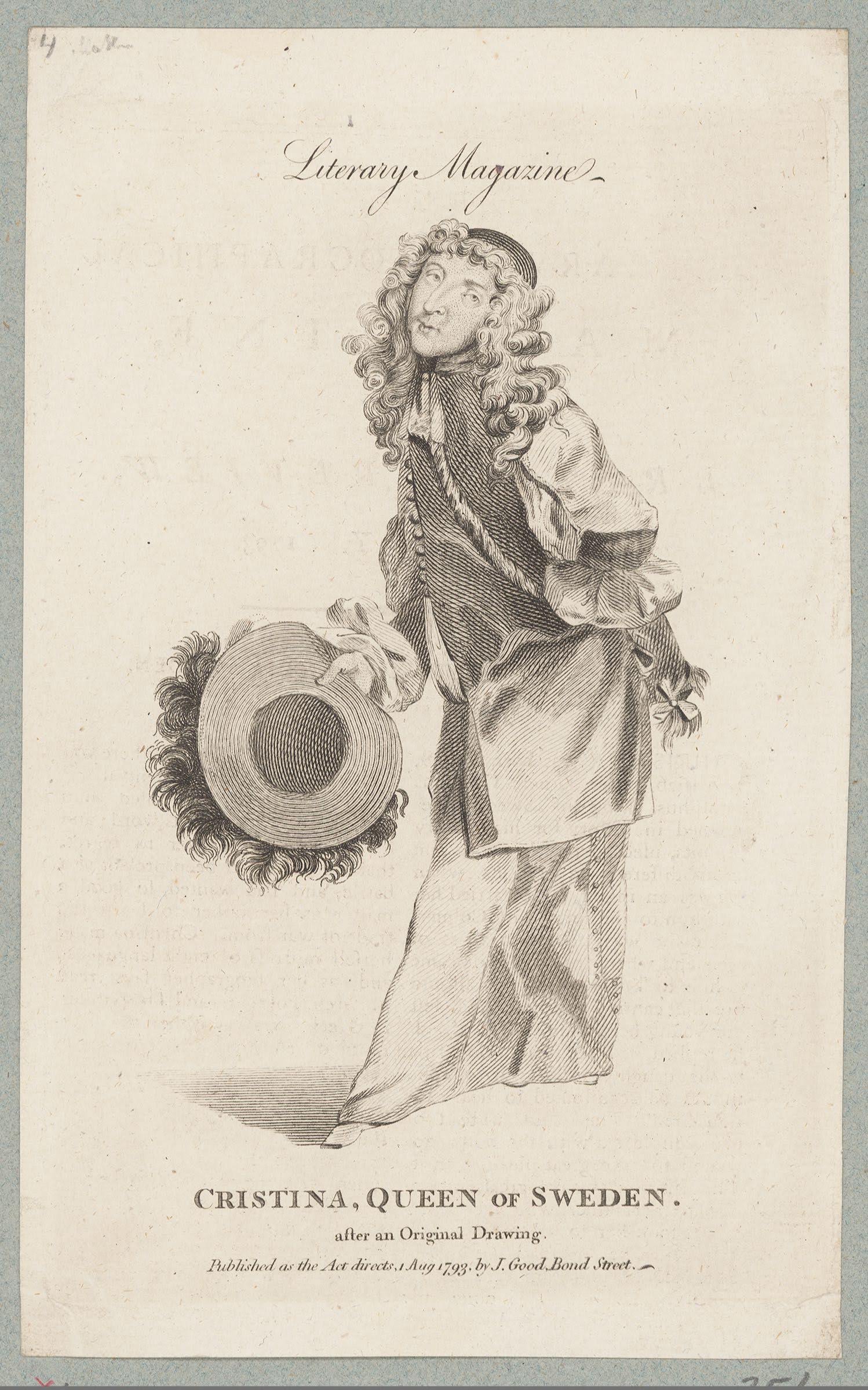
Above: Kristina.


Above: Elizabeth, Queen of Bohemia.


Above: Sir Edward Nicholas.

Note: Elizabeth's uncle was her maternal uncle, King Christian IV of Denmark. His older sister and Elizabeth's mother was Anne of Denmark, who was queen consort of England and Scotland by her marriage to King James I and VI.

Excerpt from Elizabeth Stuart, Queen of Bohemia's letter to Sir Edward Nicholas, dated April 16/26 (New Style), 1655

Source:

Archaeologia, or, miscellaneous tracts relating to antiquity, volume 37, part 1, page 225, published by the Society of Antiquaries of London, 1857
The letter excerpt:

Hagh, April 26.
Mr Secretarie, ... The peace betwixt France and Cromwell is much talked of heere; but I hope the Marquis de Leide, Ambass:re from the King of Spaine, will hinder it. They say he goes this next week, verie well accompanied, and it is reported that both the Queene of Sueden and the Prince of Condé sends with him to Cromwell; but I cannot assure you of the truth of it. Queen Mother of Sueden is dead, her daughter seemes much troubled at it, which makes her rap out with manie an oath. ...
Your most affectionat frend,
E R

With modernised spelling:

Haag, April 26.
Mr. Secretary,
... The peace betwixt France and Cromwell is much talked of here; but I hope the Marquis de Leyde, ambassador from the King of Spain, will hinder it. They say he goes this next week, very well-accompanied, and it is reported that both the Queen of Sweden and the Prince of Condé sends with him to Cromwell; but I cannot assure you of the truth of it. Queen Mother of Sweden is dead, her daughter seems much troubled at it, which makes her rap out with many an oath. ...
Your most affectionate friend,
E. R.

French translation (my own):

La Haye, le 26 avril.
Monsieur le secrétaire,
... On parle beaucoup ici de la paix entre la France et Cromwell; mais j'espère que le marquis de Leyde, ambassadeur du roi d'Espagne, l'en empêchera. L'on dit qu'il s'en va la semaine prochaine, très bien accompagné, et l'on rapporte que la reine de Suède et le prince de Condé l'envoient avec lui à Cromwell; mais je ne peux pas vous en assurer la vérité. La reine-mère de Suède est morte, sa fille en paraît très troublée, ce qui lui fait crier maints serments. ...
Votre très affectionnée amie
E. R.

Czech translation (my own):

Haag, 26. dubna.
Pane sekretáři,
... O míru mezi Francií a Cromwellem se zde hodně mluví; ale doufám, že markýz de Leyde, velvyslanec španělského krále, tomu bude bránit. Člověk říká, že jde příští týden, s velmi dobrým doprovodem, a je hlášeno, že švédská královna i princ z Condé s ním posílají do Cromwellu; ale nemohu vás ujistit o pravdě. Královna matka Švédska je mrtvá, zdá se, že její dcera je z toho velmi znepokojená, což ji nutí vykřiknout mnoho přísah. ...
Vaše nejmilejší přítelkyně
E. R.

Swedish translation (my own):

Haag, den 26 april.
Min herr sekreterare,
... Freden mellan Frankrike och Cromwell är mycket omtalad här; men jag hoppas att markisen de Leyde, ambassadören från konungen av Spanien, kommer att hindra det. Man säger att han går denna nästa vecka, mycket välledsagad, och det rapporteras att både drottningen av Sverige och prinsen de Condé skickar med honom till Cromwell; men jag kan inte försäkra Er om sanningen i det. Sveriges drottningmodern är död, hennes dotter verkar mycket uppriven över det, vilket får henne att ropa ut många ed. ...
Er tillgivnaste vän
E. R.


Above: Kristina.


Above: The Prince de Condé.


Above: Maria Eleonora.


Above: Elizabeth Stuart, Queen of Bohemia.


Above: Sir Edward Nicholas.

Note: "The enmity that at this time existed between Elizabeth and Christina of Sweden is well known."

Excerpt from Elizabeth Stuart, Queen of Bohemia's letter to Sir Edward Nicholas, dated January 1/11 (New Style), 1655

Source:

Memoirs of John Evelyn, volume 2, pages 216 to 217, published by William Bray, 1827
The letter excerpt:

Hagh, Jan. 11 (1654-5).
Mr. Secretarie, ... the queene of Sueden takes a house at Anwerp, all her owne people leaues her and Italiens and Spaniards come in theire place. ...
your most affectionat frend. ...

With modernised spelling:

Haag, January 11 [1654-5].
Mr. Secretary,
... The Queen of Sweden takes a house at Antwerp, all her own people leaves her and Italians and Spaniards come in their place. ...
your most affectionate friend. ...

French translation (my own):

La Haye, le 11 janvier [1654-5].
Monsieur le secrétaire,
... La reine de Suède prend une maison à Anvers, tous les siens la quittent et des Italiens et des Espagnols viennent à leur place. ...
votre très affectionnée amie.

Czech translation (my own):

Haag, 11. ledna [1654-5].
Pane sekretáři,
... Královna Švédska zůstává v domě v Antverpách, všichni její vlastní lidé ji opouštějí a místo nich přicházejí Italové a Španělé. ...
vaše nejmilejší přítelkyně.

Swedish translation (my own):

Haag, den 11 januari [1654-5].
Min herr sekreterare,
... Drottningen av Sverige tar hus i Antwerpen, allt hennes eget folk lämnar henne och italienare och spanjorer kommer i deras ställe. ...
Er tillgivnaste vän.


Above: Kristina.


Above: Elizabeth Stuart, Queen of Bohemia.


Above: Sir Edward Nicholas.

Excerpt from Elizabeth Stuart, Queen of Bohemia's letter to Sir Edward Nicholas, dated December 11/21 (New Style), 1654

Source:

Memoirs of John Evelyn, volume 2, pages 208 to 210, published by William Bray, 1827
The letter excerpt:

Hagh De: 21. (1654.)
Mr Secretarie, ... The French Ambassadour beleeues the treatie with Cromwell as good as broken; he is much ioyed that the meeting betwixt the Queene of Sueden and P. of Condé was to neither of theire content, for he desired to be receaued as the Queene receaued the Arcdduc, which she refused, saying that she had done too much for in that and woulde doe so no more, yet he came to see her brusquement a l'improuist, and did nothing but railler her in his talke, which putt her so out as she said almost not one worde. This was in the morning; after dinner she sent to know if he woulde see the play at night, he said he would obey her, but desired to know whither he shoulde come knowen or as vnknowen, for if he came as Prince of Condé he looked tohaue a chaise a bras as the Archduc had — she saide he had better come unknowen, so he came, and she stood all the play, railling with Monr Quito the Princes favourit. the next day the P. went to Bruxelles, and neither of them well satisfied with the other. ... I thank you for your congratulation of Apollos returne, you know how great a favorit he is to
Your most affectionat frend. ...

With modernised spelling:

Haag, December 21 [1654].
Mr. Secretary,
... The French ambassador believes the treaty with Cromwell as good as broken; he is much joyed that the meeting betwixt the Queen of Sweden and Prince of Condé was to neither of their content, for he desired to be received as the Queen received the Archduke, which she refused, saying that she had done too much for in that and would do so no more, yet he came to see her brusquement à l'improviste and did nothing but railler her in his talk, which put her so out as she said almost not one word.

This was in the morning; after dinner she sent to know if he would see the play at night, he said he would obey her, but desired to know whether he should come known or as unknown, for if he came as Prince of Condé he looked to have a chaise à bras as the Archduke had — she said he had better come unknown, so he came, and she stood all the play, railing with Monsieur Quito, the Prince's favourite. The next day the Prince went to Brussels, and neither of them well satisfied with the other. ... I thank you for your congratulation of Apollo's return, you know how great a favourite he is to
your most affectionate friend. ...

French translation (my own):

La Haye, le 21 décembre [1654].
Monsieur le secrétaire,
... L'ambassadeur de France estime que le traité avec Cromwell est pour ainsi dire rompu; il est très heureux que la rencontre entre la reine de Suède et le prince de Condé n'ait été ni à leur contentement, car il désirait être reçu comme la reine recevait l'archiduc, ce qu'elle refusa, disant qu'elle en avait trop fait pour cela et il ne voulait plus le faire, mais il venait la voir brusquement à l'improviste et ne faisait que la railler dans son discours, qui l'offensait tellement qu'elle ne disait presque pas un mot.

C'était le matin; après le dîner, elle fit savoir s'il voulait voir la pièce le soir, il dit qu'il lui obéirait, mais il désirait savoir s'il devait se montrer connu ou inconnu, car s'il venait en prince de Condé, il demanderait à avoir une chaise à bras comme l'archiduc en avait — elle dit qu'il valait mieux qu'il vienne inconnu, alors il vint, et elle resta debout pendant toute la pièce, raillant avec M. Quito, le favori du prince. Le lendemain, le prince se rendit à Bruxelles, et aucun d'eux n'était très satisfait de l'autre. ... Je vous remercie pour vos félicitations pour le retour d'Apollon, vous savez bien à quel point il est le favori de
votre très affectionnée amie. ...

Czech translation (my own):

Haag, 21. prosince [1654].
Pane sekretáři,
... Francouzský velvyslanec věří, že smlouva s Cromwellem je stejně dobrá jako porušená; je velmi rád, že setkání mezi švédskou královnou a princem z Condé nebylo k jejich spokojenosti, protože si přál být přijat, jako královna přijala arcivévodu, což odmítla s tím, že pro to udělala příliš mnoho a už to nechtěl udělat, ale přišel ji vidět brusquement à l'improviste a nedělal nic jiného, ​​než že ji raillait ve svých řečech, což ji tak urazilo, že neřekla skoro ani slovo.

Bylo to ráno; po večeři poslala, aby věděla, jestli chce vidět hru v noci, řekl, že ji poslechne, ale chtěl vědět, jestli by měl být známý nebo neznámý, protože kdyby přišel jako princ z Condé, požádal by o chaise à bras jako měl arcivévoda — řekla, že by měl přijít neznámý, a tak přišel, a ona stála po celou dobu hry a zábradlí s monsieur Quito, princův oblíbenec. Druhý den princ odjel do Bruselu a ani jedno z nich nebylo s tím druhým příliš spokojeno. ... Děkuji vám za vaše blahopřání k Apollónovu návratu, víte, jak velký oblíbenec je u vaší nejmilovanější přítelkyně. ...

Swedish translation (my own):

Haag, den 21 december [1654].
Min herr sekreterare,
... Den franske ambassadören anser att fördraget med Cromwell är så gott som brutet; han är mycket glad över att mötet mellan drottningen av Sverige och prinsen av Condé inte var till något av deras belåtenhet, ty han önskade att bli mottagen som drottningen tog emot ärkehertigen, vilket hon vägrade och sade att hon hade gjort för mycket för i det och ville inte göra det mer, men ändå kom han för att se henne brusquement à l'improviste och gjorde inget annat än railler henne i sitt tal, vilket kränkte henne så mycket att hon nästan inte sade ett ord.

Detta var på morgonen; efter middagen skickade hon för att veta om han ville se pjäsen på natten, han sade att han skulle lyda henne, men han ville veta om han skulle bli känd eller okänd, för om han kom som prinsen av Condé skulle han be om att få ha en chaise à bras som ärkehertigen hade — hon sade att det var bäst att han hade kommit okänd, så han kom, och hon stod under hela pjäsen och raljerade med monsieur Quito, prinsens favorit. Dagen efter reste prinsen till Bryssel, och ingen av dem var väl tillfreds med den andra. ... Jag tackar Er gratulation till Apollos återkomst, Ni vet väl hur stor favorit han är för
Er tillgivnaste vän. ...


Above: Kristina.


Above: The Prince de Condé.


Above: Elizabeth Stuart, Queen of Bohemia.


Above: Sir Edward Nicholas.

Notes: "Yet the Prince de Condé was a great admirer of Christina, and observed upon one occasion — 'How great is the magnanimity of this Princess, who could so easily give up that for which mankind are continually destroying each other, and which so many throughout their whole lives pursue without attaining!' Condé, at the period here recorded, was in exile at Brussells; and though he felt offended upon the score of etiquette, her abdicated Majesty seems to have treated him with great familiarity, exclaiming 'Cousin! who would have thought ten years ago that we should have met at this distance from our countries?' The Prince might have thanked her for his exile, as it arose partly from her intermeddling in the affairs of the Fronde in France, a few years previous."

Apollo = Elizabeth's lapdog.

Excerpt from Elizabeth Stuart, Queen of Bohemia's letter to Sir Edward Nicholas, dated November 23/December 3 (New Style), 1654

Sources:

Memoirs of John Evelyn, volume 2, pages 206 to 207, published by William Bray, 1827
The Sibyl of the North: The Tale of Christina, Queen of Sweden, page 117, by Faith Compton Mackenzie, 1931


The letter excerpt:

Hagh De: 3 (1654.)
Mr. Secretarie, I receaued yours at Berghen, whither I was come from Anwerp and Bruxells. I finde you haue vnridled my riddle verie right. I saw the Queene of Sueden at the play, she is extrauagant in her fashion and aparell, but she has a good well fauoured face, and a milde countenance. One of the players that knew me tolde her who I was, but she made no shew of it. ... I stayed but Sunday at Bruxelles, and returned to Anwerp vpon Munday, and heearing from Duart how the Queene of Sueden had desired to know when I came back thither, that she might meet with me in an indifferent place, I made the more hast away the next day because I had no minde to speak with her since I heard how unhandsomlie she had spoken of the King my deare Brother and of the King my deare Nephue, and indeed of all our nation, so I auoided it and went away as soone as I had dined. Yett she sent Donoy to me with a verie civill message that she was sorie she coulde not use that ciuilitie to me as she both should doe and desired, hoping that one day wee might meet together with more freedome; I answered her as civillie as I coulde, and now when I went from Berghen I gaue Sr Will: Swann charge to make her a complement from me. ... it is so colde as I can say no more, but ame euer
Your most affectionat frend. ...

With modernised spelling:

Haag, December 3 [1654].
Mr. Secretary,
I received yours at Bergen, whither I was come from Antwerp and Brussels. I find you have unriddled my riddle very right. I saw the Queen of Sweden at the play, she is extravagant in her fashion and apparel, but she has a good, well-favoured face and a mild countenance. One of the players that knew me told her who I was, but she made no show of it. ...

I stayed but Sunday at Brussels, and returned to Antwerp upon Monday, and hearing from Duart how the Queen of Sweden had desired to know when I came back thither, that she might meet with me in an indifferent place, I made the more haste away the next day because I had no mind to speak with her, since I heard how unhandsomely she had spoken of the King my dear Brother and of the King my dear Nephew, and indeed of all our nation, so I avoided it and went away as soon as I had dined.

Yet she sent Donoy to me with a very civil message that she was sorry she could not use that civility to me as she both should do and desired, hoping that one day we might meet together with more freedom; I answered her as civilly as I could, and now when I went from Bergen I gave Sir William Swann charge to make her a compliment from me. ... It is so cold as I can say no more, but am ever
your most affectionate friend. ...

French translation (my own):

La Haye, le 3 décembre [1654].
Monsieur le secrétaire,
J'ai reçu votre lettre à Bergen, d'où j'étais venu d'Anvers et de Bruxelles. Je vois que vous avez très bien résolu mon énigme. J'ai vu la reine de Suède à la pièce, elle est extravagante dans sa mode et son habillement, mais elle a un bon visage bien favorisé et une coutenance douce. Une des joueuses qui me connaissait lui a dit qui j'étais, mais elle n'en a pas fait d'histoires. ...

Je ne restai que dimanche à Bruxelles et revins à Anvers lundi, et lorsque j'appris par Duart comment la reine de Suède avait désiré savoir quand j'y reviendrais afin qu'elle puisse me rencontrer dans un endroit indifférent, je me hâtai d'autant plus partir le lendemain parce que je ne voulais pas lui parler, car j'avais entendu avec quelle méchanceté elle avait parlé du roi mon cher Frère et du roi mon cher Neveu, et même de toute notre nation, alors je l'ai évité et je partis aussitôt que j'eus dîné.

Pourtant, elle m'a envoyé Donoy avec un message très civil disant qu'elle regrettait de ne pas pouvoir utiliser cette civilité avec moi comme elle devrait le faire et le désirait, espérant qu'un jour nous pourrions nous rencontrer avec plus de liberté; je lui ai répondu aussi civilement que possible, et maintenant, quand je suis parti de Bergen, j'ai chargé sir Guillaume Swann de lui faire un compliment de ma part. ... Il fait si froid que je ne peux pas en dire plus, mais je suis toujours
votre très affectionnée amie. ...

Czech translation (my own):

Haag, 3. prosince [1654].
Pane sekretáři,
Váš dopis jsem obdržela v Bergenu, kam jsem přijela z Antverp a Bruselu. Vidím, že jste mou hádanku vyřešili velmi správně. Viděla jsem švédskou královnu ve hře, je extravagantní ve své módě a oblečení, ale má dobrou, oblíbenou tvář a mírnou tvář. Jedna z hráček, která mě znala, jí řekla, kdo jsem, ale nedělala si z toho hlavu. ...

V Bruselu jsem zůstala jen v neděli a v pondělí jsem se vrátila do Antverp, a když jsem od Duarta slyšela, jak švédská královna chtěla vědět, až se tam vrátím, aby se se mnou mohla setkat na lhostejném místě, pospíšila jsem si ještě víc abych se druhý den dostala pryč, protože jsem s ní nechtěla mluvit, protože jsem slyšela, jak neslušně mluvila o králi, mém drahém Bratru, a o králi, mém drahém Synovci, a vlastně o celém našem národě, takže jsem se tomu vyhýbala a odešela, jakmile jsem se navečeřela.

Přesto mi poslala Donoye s velmi zdvořilým vzkazem, že ji mrzí, že ke mně nemůže použít takovou zdvořilost, jak by to měla dělat a jak si to přála, a doufala, že se jednoho dne setkáme společně s větší svobodou; odpověděla jsem jí tak zdvořile, jak jsem jen mohla, a teď, když jsem jela z Bergenu, dala jsem siru Williamu Swannovi pověření, aby ji ode mě pochválil. ... Je tak chladno, že už nemůžu říct víc, ale vždy jsem
vaše nejmilejší přítelkyně. ...

Swedish translation (my own):

Haag, den 3 december [1654].
Min herr sekreterare,
Jag fick Ert brev i Bergen, dit jag hade kommit från Antwerpen och Bryssel. Jag ser att Ni har löst min gåta mycket korrekt. Jag såg Sveriges drottning på pjäsen, hon är extravagant i sitt mode och kläder, men hon har ett gott, omtyckt ansikte och ett mildt ansikte. En av spelarna som kände mig berättade för henne vem jag var, men hon gjorde inget väsen av det. ...

Jag stannade bara söndagen i Bryssel och återvände till Antwerpen på måndagen, och när jag hörde av Duart hur drottningen av Sverige hade velat veta när jag kom tillbaka dit så att hon kunde träffa mig på en likgiltig plats, skyndade jag mig ännu mer att komma iväg nästa dag eftersom jag inte ville tala med henne, ty jag hörde hur elakt hon hade talat om kungen, min käre Bror och om kungen, min kära Brorson, och faktiskt om hela vårt folk, så jag undvek det och gick bort så fort jag hade ätit.

Ändå sände hon Donoy till mig med ett mycket artigt meddelande att hon var ledsen att hon inte kunde använda den artigheten mot mig som hon både borde göra och önskat, i hopp om att vi en dag skulle mötas med mer frihet; jag svarade henne så artigen jag kunde, och nu när jag reste från Bergen gav jag sir William Swann i uppdrag att ge henne en komplimang från mig. ... Det är så kallt att jag inte kan säga mer, men är alltid
Er mest tillgivna vän. ...


Above: Kristina.


Above: Elizabeth Stuart, Queen of Bohemia.


Above: Sir Edward Nicholas.

Excerpt from Elizabeth Stuart, Queen of Bohemia's letter to Sir Edward Nicholas, dated October 9/19 (New Style), 1654

Source:

Memoirs of John Evelyn, volume 2, page 204, published by William Bray, 1827
The letter excerpt:

Hagh, Oct. 19. (1654.)
Mr. Secretarie, ... Thom. Killegrew is heere, who makes a rare relation of the Queene of Sueden. ... I pray be confident that I am euer
Your most affectionat frend,
ELIZABETH. ...

With modernised spelling:

Haag, October 19 [1654].
Mr. Secretary,
... Thomas Killegrew is here, who makes a rare relation of the Queen of Sweden. ... I pray be confident that I am ever
your most affectionate friend,
Elizabeth. ...

French translation (my own):

La Haye, le 19 octobre [1654].
Monsieur le secrétaire,
... Thomas Killegrew est ici, qui fait une relation rare sur la reine de Suède. ... Je vous prie d'être confident que je serai toujours
votre très affectionnée amie
Élisabeth. ...

Czech translation (my own):

Haag, 19. října [1654].
Pane sekretáři,
... Je tu Thomas Killegrew, který má o švédské královně vzácný příběh. ... Modlím se, abyste měli jistotu, že jsem vždy
vaše nejmilejší přítelkyně,
Alžběta.

Swedish translation (my own):

Haag, den 19 oktober [1654].
Min herr sekreterare,
... Thomas Killegrew är här, som gör en sällsynt redogörelse om drottningen av Sverige. ... Jag ber Er att vara säker på att jag alltid är
Er tillgivnaste vän
Elizabeth. ...


Above: Kristina.


Above: Elizabeth Stuart, Queen of Bohemia.


Above: Sir Edward Nicholas.

Excerpt from Elizabeth Stuart, Queen of Bohemia's letter to Sir Edward Nicholas, dated August 28/September 7 (New Style), 1654

Source:

Memoirs of John Evelyn, volume 2, pages 196 to 198, published by William Bray, 1827
The letter excerpt:

Hagh, Sep: 7 (1654).
Mr. Secretarie, ... The Queen of Sweden is yett at Anwerp, wee looke euerie day to see the Landgrave heere, and by him I shall know what she will doe. ...
Your most affectio
nat Frend,
E R ...

With modernised spelling:

Haag, September 7 [1654].
Mr. Secretary,
... The Queen of Sweden is yet at Antwerp, we look every day to see the Landgrave here, and by him I shall know what she will do. ...
Your most affectionate Friend,
E. R. ...

French translation (my own):

La Haye, le 7 septembre [1654].
Monsieur le secrétaire,
... La reine de Suède est encore à Anvers, nous cherchons chaque jour à voir le landgrave ici, et par lui je saurai ce qu'elle fera. ...
Votre très affectionnée Amie
E. R. ...

Czech translation (my own):

Haag, 7. září [1654].
Pane sekretáři,
... Švédská královna je ještě v Antverpách, každý den se díváme, abychom zde viděli landkraběte, a od něj budu vědět, co udělá. ...
Vaše nejmilejší Přítelkyně
E. R.

Swedish translation (my own):

Haag, den 7 september [1654].
Min herr sekreterare,
... Sveriges drottning är ännu i Antwerpen, vi ser varje dag för att se lantgraven här, och av honom skall jag veta vad hon skall göra. ...
Er tillgivnaste Vän
E. R. ...


Above: Kristina.


Above: Wilhelm VI, Landgrave of Hesse-Kassel.


Above: Elizabeth Stuart, Queen of Bohemia.


Above: Sir Edward Nicholas.

Excerpt from Elizabeth Stuart, Queen of Bohemia's letter to Sir Edward Nicholas, dated August 21/31 (New Style), 1654

Source:

Memoirs of John Evelyn, volume 2, pages 193/194 to 196, published by William Bray, 1827
The letter excerpt:

Mr. Secretarie, ... Dr. Morley has made a verie good description of the Queene of Sweden: she gaue an assignation to the French Ambassadour to meet her at Breda, whither he went, and so did the Prince and Princess of Tarente and most of our French gallants, who came all sneaking home againe, for her greefe was so great for the beating of the Spanish armie before Arras as she would not go to Breda. She sent another account than that to the Ambassadour as you may imagin, but the Landgrave writt the truth to his neece the Princess of Tarente. We haue yet heere no particullars of this defeat, but in generall it is a verie great one. ... You will heare by Mris Howards letter howe great a scape my little Nephue escaped yesterday vpon the bridge at the Princess of Orange's house, but God be thanked there was no hurt onelie the coache broken: I tooke him into my coache and brought him home. The Princess of Orange went from hence vpon Saterday, and you will haue our Baron shortlie with you at Aix, he will tell you the second part of the Queene of Sweden, for he comes from her to your Court. ...
Your most affectionat frend,
ELIZABETH.
Hage, Aug. 31. ...

With modernised spelling:

Mr. Secretary,
... Dr. Morley has made a very good description of the Queen of Sweden. She gave an assignation to the French ambassador to meet her at Breda, whither he went, and so did the Prince and Princess of Tarente and most of our French gallants, who came all sneaking home again, for her grief was so great for the beating of the Spanish army before Arras as she would not go to Breda. She sent another account than that to the ambassador, as you may imagine, but the Landgrave writ the truth to his niece the Princess of Tarente. We have yet here no particulars of this defeat, but in general it is a very great one. ...

You will hear by Mistress Howard's letter how great a scape my little Nephew escaped yesterday upon the bridge at the Princess of Orange's house, but, God be thanked, there was no hurt, only the coach broken; I took him into my coach and brought him home. The Princess of Orange went from hence upon Saturday, and you will have our Baron shortly with you at Aix, he will tell you the second part of the Queen of Sweden, for he comes from her to your court. ...
Your most affectionate friend,
Elizabeth.
Haag, August 31. ...

French translation (my own):

Monsieur le secrétaire,
... Le docteur Morley a fait une très bonne description de la reine de Suède. Elle donna mission à l'ambassadeur de France de la rencontrer à Bréda, où il se rendit, ainsi que le prince et la princesse de Tarente et la plupart de nos vaillants français, qui revinrent tous en douce chez eux, car son chagrin était si grand de la défaite de l'armée espagnole devant Arras qu'elle ne voulait pas se rendre à Bréda. Elle envoya un autre récit à l'ambassadeur, comme vous pouvez l'imaginer, mais le landgrave écrivit la vérité à sa nièce, la princesse de Tarente. Nous n'avons pas encore ici de particularités sur cette défaite, mais en général elle est très grande. ...

Vous apprendrez par la lettre de Madame Howard quelle grande évasion mon petit Neveu a échappé hier sur le pont de la maison de la princesse d'Orange, mais, grâce à Dieu, il n'a pas été blessé, seul le carrosse a été casse; je l'ai emmené dans mon carrosse et l'ai ramené chez moi. La princesse d'Orange est partie d'ici samedi, et vous aurez bientôt notre baron avec vous à Aix, il vous racontera la seconde partie de la reine de Suède, car il vient d'elle à votre Cour. ...
Votre très affectionnée amie
Élisabeth.
La Haye, le 31 août.

Czech translation (my own):

Pane sekretáři,
... Doktor Morley velmi dobře popsal královnu Švédska. Pověřila francouzského velvyslance, aby se s ní setkal v Bredě, kam odjel, stejně jako princ a princezna z Tarente a většina našich francouzských galantů, kteří se všichni znovu plížili domů, protože její zármutek byl z porážky tak velký španělské armády před Arrasem, že nechtěla jít do Bredy. Poslala velvyslanci jiný účet, jak si dovedete představit, ale lankrabě napsal pravdu své neteři, princezně z Tarente. Zde ještě nemáme žádné podrobnosti o této porážce, ale obecně je to velmi velká porážka. ...

Z dopisu paní Howardové uslyšíte, jak skvělý útěk můj malý Synovec včera utekl na mostě v domě princezny z Orange, ale díky Bohu se nezranil, jen se rozbil kočár; vzala jsem ho do svého kočáru a přivedla domů. Princezna Oranžská odsud odešla v sobotu a našeho barona budete mít brzy u sebe v Aix, poví vám druhou část o švédské královně, protože od ní přichází na váš dvůr. ...
Vaše nejmilejší přítelkyně
Alžběta.
Haag, 31. srpna.

Swedish translation (my own):

Min herr sekreterare,
... Doktor Morley har gjort en mycket god beskrivning av Sveriges drottning. Hon gav den franske ambassadören i uppdrag att träffa henne i Breda, dit han reste, och det gjorde också prinsparet av Tarente och de flesta av våra franska galanter, som alla kom hem smygande igen, ty hennes sorg var så stor över nederlaget av den spanska armén framför Arras att hon inte ville åka till Breda. Hon skickade en annan redogörelse än den till ambassadören, som Ni kanske föreställer Er, men lantgreven skrev sanningen till sin niece, prinsessan av Tarente. Vi här har ännu inga detaljer om detta nederlag, men i allmänhet är det mycket stort. ...

Ni kommer att få höra av fru Howards brev hur stor en flykt min lille Nevö rymde i går på bron vid prinsessan av Oranges hus, men tack och lov blev han inte skadad, bara vagnen gick sönder; jag tog med honom till min tränare och tog hem honom. Prinsessan av Orange reste härifrån i lördags, och Ni kommer snart att ha vår baron med Er i Aix, han skall berätta för Er andra delen om Sveriges drottning, ty han kommer från henne till Ert hov. ...
Er tillgivnaste vän
Elizabeth.
Haag, den 31 augusti.


Above: Kristina.


Above: Elizabeth, Queen of Bohemia.


Above: Sir Edward Nicholas.

Notes: "The far-famed Christina. It was in this year [1654] that she abdicated the Throne. There were several personal squabbles between the Ex-Queen of Sweden and the Ex-Queen of Bohemia; and the former felt a considerable jealousy of Elizabeth, who at this period was the correspondent of Des Cartes and of William Penn. Christina, even after her abdication, still attempted to mingle in politics. She even affected to treat and negociate with Cromwell. She also offered several personal slights to the Queen of Bohemia: which may account for the manner in which she is spoken of upon several occasions."

"Her Majesty's spleen against Christina seems to have affected her feelings even towards her own relations; for Emilia, Princess of Tarente, was the daughter of William, Elector of Hesse Cassel, whilst Charles, the Elector Palatine, son to the Queen, was married to Charlotte, another daughter of the Hessian Elector. The Prince was Henry Charles de la Tremouille, then in the service of the States, and in command of the Hessian cavalry. His connexion with these august families procured him to be chosen a Knight of the Garter in 1653, along with the young Duke of Gloucester."

"her greefe was so great for the beating of the Spanish armie before Arras" = "Allusive to the defeat of the Spaniards by the French on St. Louis's day, when their lines were forced, whilst besieging Arras, with great slaughter."

The Princess of Orange = Mary Henrietta Stuart.

Monday, December 12, 2022

Kristina's letter to Auguste Sophie of Pfalz-Sulzbach, Princess of Lobkowicz, about her son Prince Ferdinand August of Lobkowicz, dated January 11, 1676

Source:

Mémoires concernant Christine, reine de Suède, volume 4, page 94, compiled and edited by Johan Arckenholtz, 1760


The letter:

Le 11. Janvier 1676.
Madame la Princesse Lobcowiz, j'ai vu le Prince Lobcowiz votre Fils, qui m'a rendu votre Lettre pleine d'expressions obligeantes, qui ont été reçues aussi agréablement que vous pouvez le souhaitter. Je vous en remercie, en me réjouissant avec vous des bonnes qualités du Prince votre Fils, que j'ai trouvé sage & bien fait. Je l'obligerai & le favoriserai en tout ce que je pourrai pour l'amour de vous, & pour l'amour du lui-même; & je souhaitte que Dieu vous le conserve grand nombre d'années, & le comble de bonheur, aussi-bien que vous.

Czech translation (my own):

11. ledna 1676.
Paní kněžno z Lobkovic,
Viděla jsem knížete z Lobkovic, vašeho syna, který mi vrátil váš dopis plný úslužných výrazů, které byly přijaty tak příjemně, jak si jen můžete přát. Děkuji vám za to, raduji se s vámi z dobrých vlastností knížete, vašeho syna, kterého jsem shledala moudrým a hezkým. Budu mu vyhovět a ho podporovat ve všem, co budu moci, kvůli vám a kvůli němu samému; a přeji Bohu, aby ho pro vás uchoval po mnoho let a zasypal jeho stejně jako vás štěstím.

Swedish translation (my own):

Den 11 januari 1676.
Madam prinsessan Lobkowitz,
Jag har sett prins Lobkowitz, Er son, som har återlämnat Ert brev fullt av vänliga uttryck till mig, som mottagits så angenämt som Ni kunde önska. Jag tackar Er för detta, glädjande mig med Er över prinsens, Er sons, goda egenskaper, som jag funnit vis och välbildad. Jag skall förplikta och gynna honom i allt vad jag kan för Er skull och för hans egen skull; och jag önskar att Gud bevarar honom åt Er i många år och överöser honom lika väl som Er med lycka.

English translation (my own):

January 11, 1676.
Madame Princess Lobkowicz,
I have seen Prince Lobkowicz, your son, who has returned your letter full of obliging expressions to me, which have been received as agreeably as you could wish. I thank you for this, rejoicing with you in the good qualities of the Prince, your son, whom I have found wise and well-formed. I shall oblige and favour him in all that I can for your sake, and for the sake of himself; and I wish God to preserve him for you for many years, and shower him as well as you with happiness.


Above: Kristina.


Above: Auguste Sophie of Pfalz-Sulzbach, Princess of Lobkowicz.


Above: Prince Ferdinand August of Lobkowicz.

Note: The native Czech spelling of Lobkowicz is Lobkovic.